

Dog tags for pets are one of the simplest and most effective ways to keep your pet safe. Whether you have a dog, a cat, or any other companion animal, an identification tag helps ensure that your pet can be returned .
1. What Are Dog Tags for Pets?
Dog tags for pets are small identification tags attached to a pet’s collar. They contain key details such as the pet’s name, the owner’s phone number, and sometimes the home address. These tags allow anyone who finds the pet to contact the owner immediately without needing a microchip scanner or vet visit.
2. Why Dog Tags Are Important
Dog tags play an essential role in pet safety. They offer immediate identification, which dramatically increases the chances of a lost pet being returned quickly. While microchips are excellent for long-term identification, dog tags provide instant contact details accessible to anyone. This combination reduces the risk of permanent loss and helps protect your pet at all times.
3. Benefits of Dog Tags for Pets
Instant Identification
A dog tag provides direct information without needing any special tools.
Faster Return of Lost Pets
If your pet wanders off, the finder can call you right away.
Supports Responsible Ownership
Pet tags show that the pet belongs to a caring owner who prioritizes safety.
Affordable and Long-Lasting
Dog tags are inexpensive yet durable enough to last for years.
4. What Information Should Be on a Dog Tag?
The following details are recommended for every pet tag:
- Pet’s name
- Owner’s primary phone number
- Optional second phone number
- City and country (optional)
- Home address (optional)
- Medical needs (if necessary)
Including clear and simple contact details increases the chances of a successful reunion.
5. Types of Dog Tags for Pets
Metal Dog Tags
Strong, durable, and suitable for active pets.
Plastic Dog Tags
Lightweight and quiet, ideal for smaller pets.
Silicone Dog Tags
Soft, flexible, and noise-free.
QR Code Tags
Modern tags containing a scannable code that links to your pet’s profile.
Designer & Custom Tags
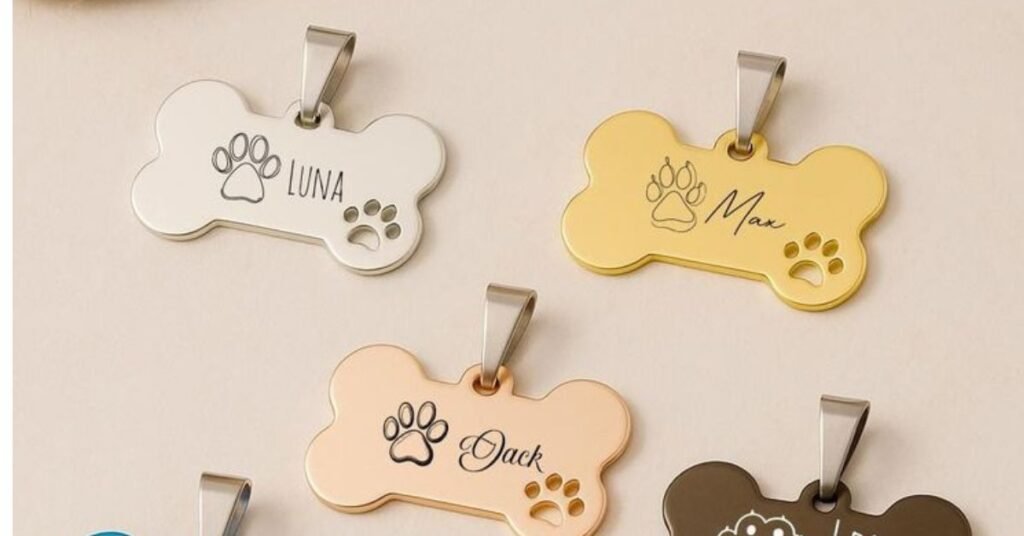
Stylish tags available in various shapes such as bones, hearts, circles, and stars.
6. How to Choose the Right Dog Tag
When selecting a dog tag, consider durability, readability, comfort, and size. Metal tags work best for large active dogs, while silicone or lightweight plastic tags are ideal for small pets. Make sure the engraving is deep and clear so the information remains readable over time.
7. Safety Tips for Using Dog Tags
- Check your pet’s tag regularly for wear and tear
- Ensure the collar fits properly but is not too tight
- Update your tag information whenever your phone number or address changes
- Replace faded or damaged tags immediately
8. Engraving Tips
Always use simple, clear text. Avoid too much information, which can make the tag difficult to read. Use capital letters for the pet’s name and keep the contact number highly visible.
9. Dog Tags vs Microchips
Microchips provide permanent identification but require a special scanner. Dog tags provide instantly visible information. The best approach is to use both, ensuring two layers of protection.
10. How Often Should You Replace a Pet Tag?
Most pet tags last one to two years, depending on material and activity level. If the engraving becomes hard to read or the tag starts to bend or crack, it should be replaced immediately.
11. Custom Dog Tags for Personality
Custom designs allow pet owners to choose shapes, colors, and styles that match their pet’s personality. Many brands offer reflective, glow-in-the-dark, or themed tags for added style and visibility.
12. Cost of Dog Tags for Pets
The price depends on material, size, and customization. Basic metal tags are inexpensive, while designer or QR tags cost more due to advanced features.
13. Where to Buy Dog Tags
Dog tags can be purchased online, at pet stores, or through custom engraving shops. Online options give more variety, while physical stores allow you to feel the material before buying.
If you want, I can also create:
- A short version blog
- HTML code for this blog
- SEO title & meta description
- 5 different keyword options
- Image ideas for your blog
14. Maintenance of Dog Tags
Regular maintenance ensures the tag remains effective and durable:
- Inspect the tag weekly for scratches, cracks, or loose rings
- Clean metal or silicone tags occasionally with mild soap and water
- Replace worn-out tags promptly to maintain legibility
15. Seasonal Considerations
Dog tags may be affected by weather:
- Summer: Avoid prolonged exposure to water or intense sun to prevent fading
- Winter: Ensure tags are not frozen or brittle due to cold
- Waterproof tags or protective coatings can increase longevity
16. Training Your Pet to Wear a Tag
Some pets may initially resist collars or tags:
Gradually increase the time until the pet is comfortable
Start with short periods of wearing the collar with tag
Reward your pet with treats and praise when they tolerate it
17. Modern Options and Smart Tags
Technology-enhanced dog tags are increasingly popular:
- QR Code Tags: Scanning the code shows owner contact info
- NFC Tags: Store medical info or vaccination records
- GPS-enabled Tags: Track your pet’s location in real-time
These provide additional security and convenience for busy pet owners.
18. Benefits of Custom Dog Tags
Custom tags allow personalization for style and clarity:
Reflect your pet’s individual style while ensuring safety
Choose shapes, colors, and fonts
Add your pet’s unique personality with short messages
18. Benefits of Custom Dog Tags
Custom tags allow personalization for style and clarity:
- Choose shapes, colors, and fonts
- Add your pet’s unique personality with short messages
- Reflect your pet’s individual style while ensuring safety
19. Dog Tag Checklist Before Purchase
Before buying, make sure:
- Material is durable and safe
- Size and weight match your pet
- Engraving is clear and readable
- Tag includes essential information
- Optional features (QR, reflective, glow-in-the-dark) are considered

20. Conclusion on the Importance of Dog Tags
Dog tags are one of the simplest yet most reliable tools for pet safety. They provide instant identification, quick communication, and peace of mind for pet owners. Whether your pet is young or old, active or calm, indoor or outdoor, a dog tag ensures that your contact information is always available to anyone who finds your pet. It is a low-cost, high-impact accessory that every responsible pet owner should prioritize.
21. Legal Requirement in Some Regions
In many areas, pet identification tags are legally required. Local governments and animal control departments often mandate that pets must wear tags showing the owner’s information. This reduces the burden on shelters and helps lost pets get home faster. Even if your area does not enforce this law, using a dog tag is still a highly recommended safety practice.
Pingback: Sympathy Card for Pet Dog – Comforting Words of Support